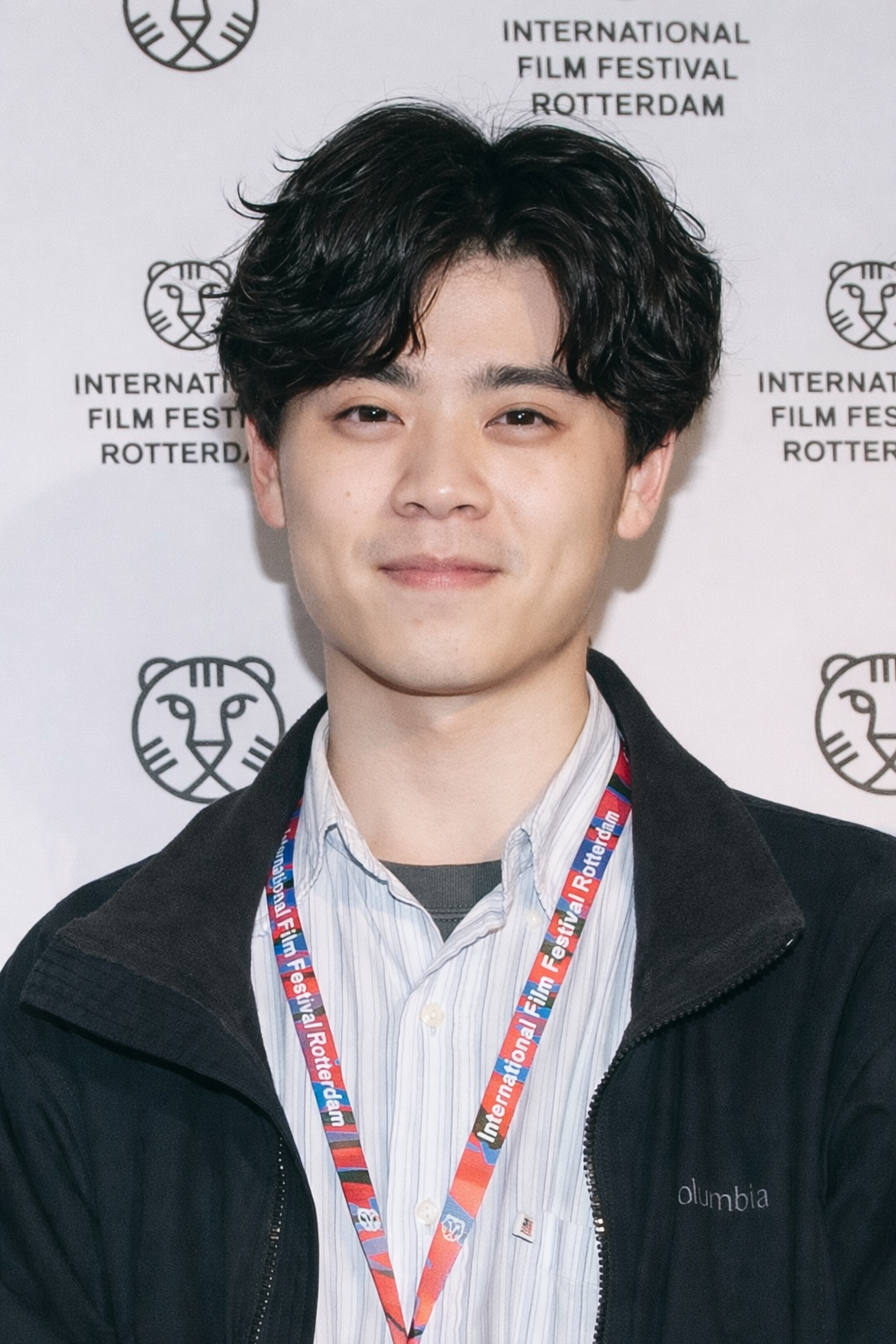

Yu Chih-chieh is a Taiwanese filmmaker whose work explores thriller, suspense and mockumentary storytelling, combining genre filmmaking with cultural allegory and psychological tension. A graduate of the National Taiwan University of Arts, he is currently pursuing an MFA in Film at the university.
His short film Contained (神明在看) won Best Student Narrative at the 44th Golden Harvest Awards and received nominations at the China Golden Rooster and Hundred Flowers Film Festival and Pingyao International Film Festival. He has also participated in Platform BUSAN (2022), FIRST Training Camp (2023) and FIRST Genre Lab (2024).
His graduation film, Redacted (四牲六道), received the Jury Special Award at the 46th Golden Harvest Awards, the Magnetic Award at the FIRST Fantastic Film Festival and the Grand Jury Prize at In Moments Film Festival.
His latest short, Isolation (閩江船事件), accompanies the development of his debut feature project, which has received support from Taiwan’s Ministry of Culture, Taipei Film Festival and Golden Horse Film Project Promotion, where it won the TAICCA Original Award.
Through his work, Yu continues to use genre as a powerful lens for exploring culture, society and the psychological tensions beneath everyday life.
What was the starting point for this film, and what made you want to tell this particular story?
The starting point came from a deep fascination with local folk culture, urban legends, and the way cultural rituals intersect with contemporary societal anxieties. I wanted to take a iconic cultural trope—the Jiangshi (hopping vampire)—and strip away the conventional horror clichés to look at it through a human, grounded, and modern lens. The desire to tell this story came from asking: What happens when a legacy or a tradition reaches its end in the modern world? It allowed me to weave supernatural suspense with a subtext of cultural memory and forgotten histories. Additional information: When I was in high school, I filmed a lot of war veterans. Their stories are similar to Lao Li’s zombie story today. I may have been inspired by that. Also, I really like What We Do in the Shadows (a Film)!
What did the short-film format allow you to do creatively that a longer format might not have?
The short format demands precise narrative economy. It forced me to lean heavily into atmospheric tension, subtext, and immersion rather than lengthy exposition. Creatively, it allowed for direct experimentations with tone, genre hybridization, and pacing—giving the audience a concentrated, high-intensity experience where every frame, sound cue, and visual motif carries deliberate weight without needing a traditional three-act padding. Most importantly, short films don’t have the same financial (investor) pressure as feature films, allowing for bolder and freer imagination and creation, which is invaluable.
Is there a particular moment, character or idea in the film that holds special significance for you as the director? The core idea of “the last of its kind” holds the deepest personal significance. There is a specific beat near the climax where the boundary between fear and empathy blurs—where the jiangshi isn’t just an object of terror, but a tragic relic of time slipping away. Capturing that precise shift in emotional resonance for the audience was the heart of the project for me.
What conversation do you hope the film creates with audiences after they leave the cinema?
I hope audiences engage in discussions about how we view declining traditions and forgotten folklore today. Beyond the immediate thrills and genre elements, I want them to talk about the tension between modernization and cultural memory—and how society decides what to preserve and what to leave behind.
Where does this film sit within your wider creative journey, and what are you interested in exploring next as a filmmaker?
This film serves as an important bridge in my creative path, reinforcing my focus on suspense, horror, and genre-bending narratives rooted in localized contexts. Moving forward, I am eager to expand this thematic universe into feature-length storytelling—exploring boundary-pushing genre concepts, border-setting thrillers, and stories that challenge traditional genre expectations while maintaining a strong, distinctive directorial vision. This is also part of our ongoing efforts to advance the feature film project, “The Last Jiangshi”!