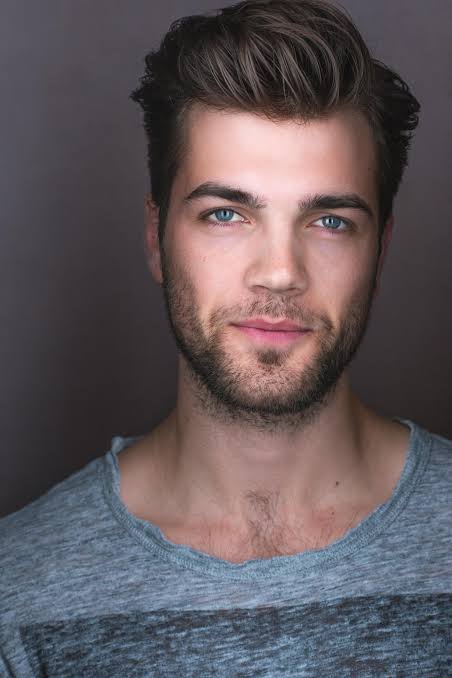

Ty Molbak is an American director, actor and producer whose multidisciplinary career spans film, theatre and independent production. Raised between New Orleans, Louisiana, and Whidbey Island, Washington, his experience as an actor, producer, first assistant director and stage director has shaped his transition into filmmaking.
His short film You Tryna Say You Love Me? marks his first narrative short featuring dialogue. As an actor, Molbak starred in the BAFTA-winning interactive film Immortality and has appeared in projects including Babylon, Master, Next Exit, She Taught Love and Law & Order. His theatre work includes Hamlet, directed by Tony Award nominee Robert O’Hara.
Molbak’s directing credits span experimental and theatrical work, including Scorch, Mary Poppins and Tan. He is also the founder of Blue Collaborative, a nonprofit production company supporting bold independent projects and emerging creative voices.
He trained at LMU’s School of Film and Television, Rutgers University’s Mason Gross School of the Arts and Shakespeare’s Globe in London.
What was the starting point for this film, and what made you want to tell this particular story?
I was drawn to two young people who felt deeply but didn’t quite have the language, or perhaps the courage, to say what they actually meant. I grew up in New Orleans and danced ballet pre-professionally. I learned young how to dissociate from discomfort, both physical and emotional, and became good at putting up walls to focus on achievement. That worked until ankle surgery took me out of ballet and I suddenly had to deal with everything I had been pushing aside. It took me years to understand that some of the resilience I was so proud of had also made it difficult for me to be emotionally honest with other people. Jerrod came out of that experience. I wanted to explore that instinct: if I just kept moving, maybe I’d never really have to sit with how I felt.
What did the short-film format allow you to do creatively that a longer format might not have?
The short allowed me to isolate one encounter from a much larger story and really live inside it. It’s essentially two people talking late at night, intellectually circling emotions they’re unpractised at saying out loud. In a feature, there’s an impulse to explain where these people came from and show where they go next. Here, we could enter their lives for twelve minutes, witness a small shift between them, and leave without resolving exactly what that shift means. The short allowed the unanswered questions to become part of the experience.
Is there a particular moment, character or idea in the film that holds special significance for you as the director?
I’m particularly interested in the chicken-and-egg relationship between intellect and emotion. Do we inherently know what we feel and seek language to articulate it? Or can the addition, or absence, of vocabulary shape feelings we’ve lost, forgotten or have yet to discover?
What conversation do you hope the film creates with audiences after they leave the cinema?
I hope it creates a conversation about emotional literacy, particularly for young men. There can be an intense desire to feel, love and connect without many role models or tools for how to do those things honestly. That emotional illiteracy doesn’t only affect the person experiencing it; it also affects everyone trying to connect with them.
Where does this film sit within your wider creative journey, and what are you interested in exploring next as a filmmaker?
This film feels very much like a bridge for me. I’ve primarily worked as an actor, alongside producing independent films, working as a 1st AD and directing for the stage. You Tryna Say You Love Me? is my first short film with dialogue, and making it brought many of those different parts of my creative life together. It’s also a proof of concept for my debut feature, Becoming Caliban, so the short gave me a chance to explore the emotional and thematic DNA of that larger story on a much more intimate scale. Going forward, I’m interested in characters who have become very good at surviving or performing a version of themselves, but privately want something much more vulnerable. I keep coming back to masculinity, identity, ambition and intimacy — especially those moments when the tools we build to protect ourselves begin preventing us from connecting with other people. I’d like to explore that territory on a larger canvas while maintaining the intimacy and specificity that drew me to this film in the first place.