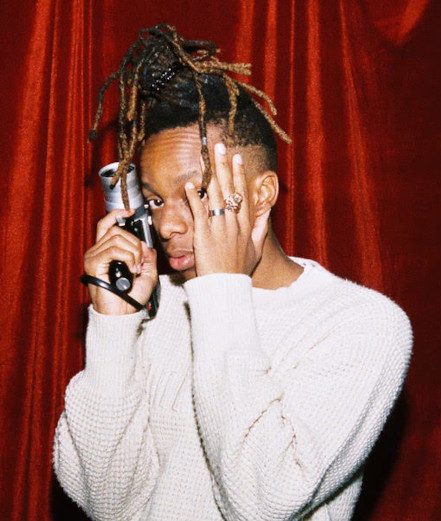

Monde Gumede is a Johannesburg-based South African writer and director known for a distinctive filmmaking style that blends narrative, music, fashion and contemporary African culture. His work is driven by complex, imperfect characters and a belief that the most personal stories can also be the most universal.
Having developed his craft through experiences in Los Angeles, London and South Africa, Gumede has directed work across film, music and advertising, including campaigns for major international brands. His films have received recognition from The Clios, AICP, Young Director Award at Cannes, Ciclope, 1.4 and Berlin Commercial.
His recent work includes Vimba! and Vimba 2, which use humour and satire to explore the contradictions of contemporary Johannesburg. At the heart of Gumede’s practice is collaboration and a desire to tell bold, culturally specific stories through a distinctly South African lens.
What was the starting point for this film, and what made you want to tell this particular story?
I was commissioned by Latitudes to make a film about the art fair. I’ll admit, I don’t know that much about art, but I became really interested in something Lebo Kekana, the curator, kept coming back to: how quickly context can turn something ordinary into something precious, and what that says about class, taste and aspiration in South Africa. So we built a very simple collision. A drunk street-surfer leaves behind a beer bottle, and a wealthy art buyer, eager for an African vessel to call her own, mistakes it for high art. Suddenly, everyone around it needs to believe in its importance. From there, VIMBA! 2 became a way to poke at the stories we tell ourselves about culture, wealth and status, and how eagerly we participate in the joke when it makes us feel sophisticated.
What did the short-film format allow you to do creatively that a longer format might not have?
The short format allowed us to treat the film almost like a controlled experiment. We could take one simple idea — what happens when everyone agrees to believe a beer bottle is art? — and push it until it broke, without having to over-explain the world around it. It also gave us permission to be formally reckless. We hid cameras in mirrored boxes, worked with long lenses, directed actors remotely and allowed real people at the fair to collide with the fiction. In a feature, that level of unpredictability would be much harder to sustain. In a short, it became the whole point: one joke, one social pressure cooker and no obligation to resolve it neatly.
Is there a particular moment, character or idea in the film that holds special significance for you as the director?
What holds the most significance for me is the irreverence of it. In South Africa, humour is often the vessel for a much deeper dance. We couch our yearning, insecurity and ambition inside the personas we construct for one another. Wealth, taste, class, politics and even sophistication can become costumes. I’m interested in how temperamental those costumes are and how quickly they can come apart. In VIMBA! 2, the joke works because everyone is performing a version of themselves until one small misunderstanding exposes just how fragile that performance is. That tension between who we are, who we want to be and who we need other people to believe we are is something I keep returning to.
What conversation do you hope the film creates with audiences after they leave the cinema?
I hope people leave talking about how much of value is something we collectively agree to perform. Who gets to decide what is art, what is tasteful or what is aspirational? And how quickly do we all fall in line once enough people act as though the answer is obvious? I also hope the film opens a conversation about the little personas we build to survive South Africa. The joke, for me, is that they can look incredibly convincing right up until the moment they fall apart.