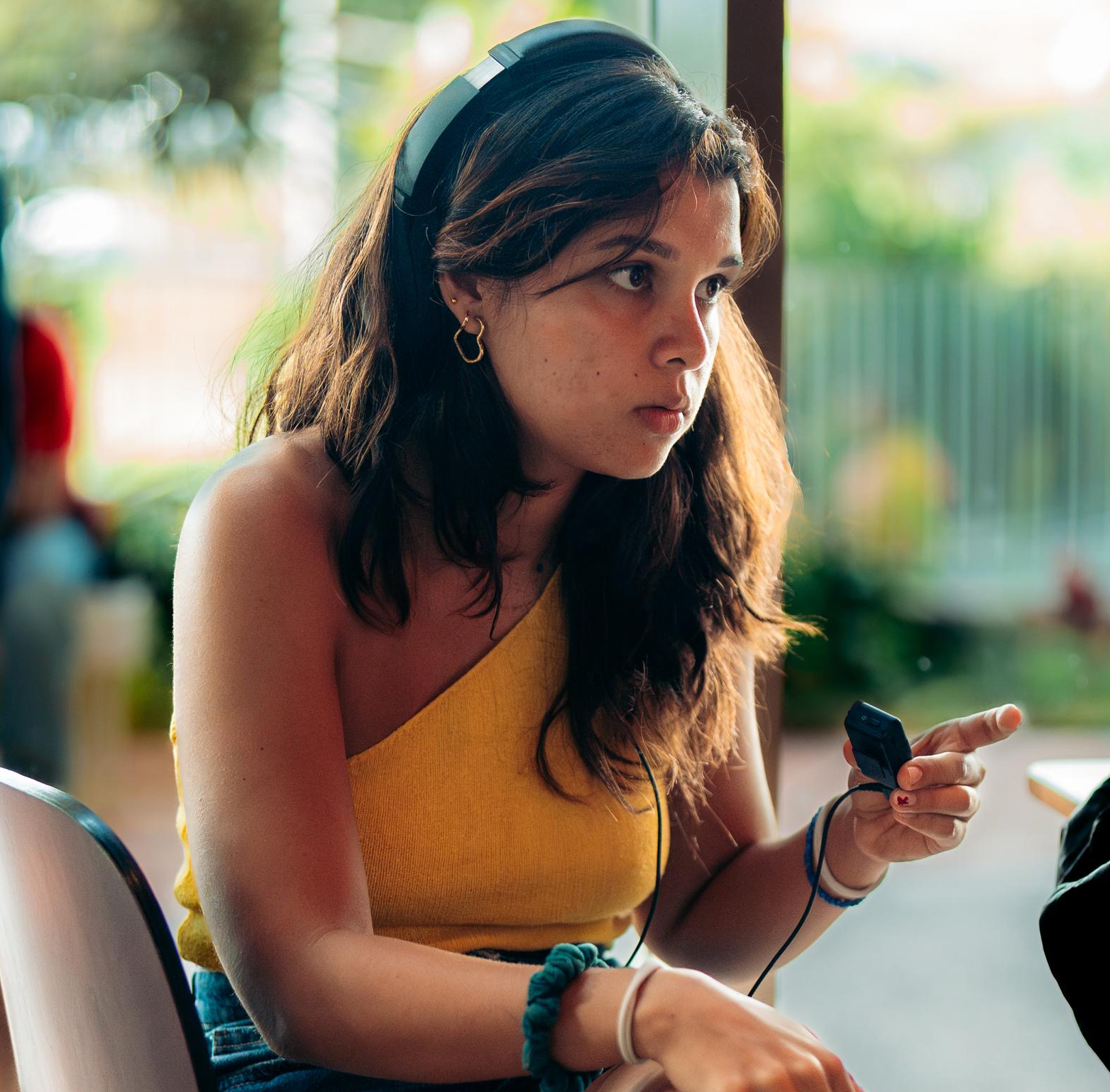

Marie Testa is a filmmaker based on Réunion Island whose passion for cinema began with childhood movie nights with her father. Inspired by films such as Dead Poets Society, she developed a love for storytelling and a desire to create films with strong emotional and visual identities.
Testa works as a third assistant director on local productions, including OPJ 974 and Les Coeurs Brisés, while also running her own video editing business and developing and directing independent short films.
Her creative practice is particularly focused on visual storytelling, symbolism and production design, exploring how sets and spaces can communicate emotions and ideas that dialogue cannot. Influenced by the use of visual metaphor in works such as Bref, she aims to create cinematic worlds in which every detail carries meaning.
Outside filmmaking, Testa practises Taekwondo, bringing the discipline, focus and rigour of the sport into her creative process.
What inspired the story behind your short film?
The idea of filming an entire project from the point of view of a bag was sleeping in my tiny idea box. I wanted to make something light, something simple that warms the heart, so I wrote the story of a boy who found a way to confess his love, even though it’s hard for him to show his feelings.
What do you hope audiences take away from your film?
That love can be something different from the tears, the screams, the intensity. It can be simple and light.
Why are short films so important in today’s media landscape?
In a world where people’s attention span is becoming shorter and shorter, short films have a more direct approach. They gave the young filmmakers the possibility to experiment and make their voices heard
What advice would you give to someone making their first short film?
To make it simple, don’t be perfectionist. We learn by doing mistakes and most importantly: surround yourself with people that have the same passion and the same desire.
Why are festivals like the FAME Shorts Film Festival important for filmmakers?
Festivals are so important because they create a real meeting place around cinema. They allow filmmakers to take their films out of the production framework, share them with an audience and confront their work with other perspectives.