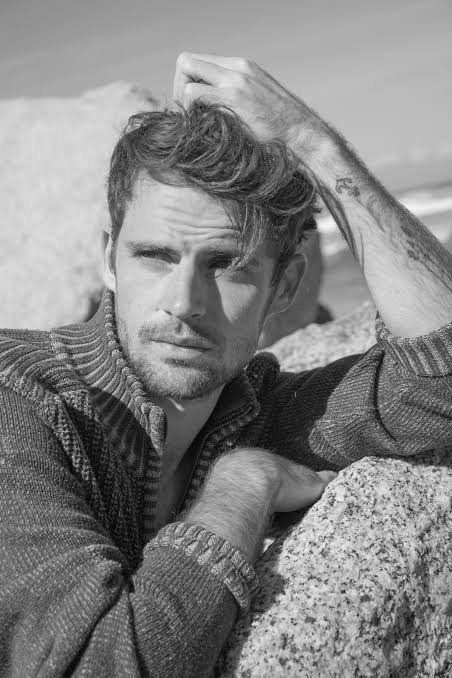

Luke Sharland is a writer, director and Executive Producer at Cape Town-based production company Mandala Films. Having spent much of his career working as a producer, Sharland recently stepped behind the camera, discovering a new creative passion for writing and directing.
The Man, the Cliff and the Dog marks his fiction directorial debut and an important step towards his ambition of writing and directing feature films.
Drawing on his extensive experience as a producer, Sharland brings a strong understanding of storytelling and filmmaking craft to his work as a director. He is currently developing several new projects centred on human stories, relationships and connection, with a particular interest in finding moments of light, humour and hope within the darker and more complicated corners of life.
Through this next chapter of his career, Sharland is building a body of work grounded in character, emotion and our shared human experience.
What was the starting point for this film, and what made you want to tell this particular story?
The starting point came over a cup of tea and a conversation with my grandfather, whose health hasn’t been the best. We spoke about life from the perspective of two very different generations — my grandfather having lived much of his life, and me in my mid-thirties asking myself, “What am I doing with my life?” I wanted to tell a story about perspective and the idea that there is always an opportunity to stop and reflect. No matter how difficult life gets, there is always hope.
What did the short-film format allow you to do creatively that a longer format might not have?
The short-film format allowed us to have a much more intensive rehearsal process. With limited scenes, my DOP and I could spend time exploring how we wanted to film them, while giving the actors the freedom to explore their roles. We could essentially rehearse the short as a play. That preparation meant that when we arrived on set, we were able to shoot everything in a very short amount of time.
Is there a particular moment, character or idea in the film that holds special significance for you as the director?
There is one line the old man says that I find incredibly powerful: “Life happens or it doesn’t.” It’s unbelievably simple, but true. We have one life, and it is meant to be lived because, like it or not, none of us is getting out of here alive.
What conversation do you hope the film creates with audiences after they leave the cinema?
Stop. Take stock of your life. We all have things going on, but hopefully we can each find something worth pursuing. I hope the film gives you hope if you need it. I hope it makes you smile and offers a little bit of escapism for eighteen minutes.
Where does this film sit within your wider creative journey, and what are you interested in exploring next as a filmmaker?
This was my fiction directing debut, and it allowed me to explore the kinds of stories I want to tell. I’m interested in people and human experiences, particularly character-driven stories that find light in the darkness. I hope this film is the beginning of finding my voice as a director. The next step is a feature film I’m currently working on, taking inspiration from this short and hopefully bringing this fantastic crew and cast along for the journey. I feel incredibly privileged to have worked with them. This film couldn’t have been made without them, so it is also a huge thank you to everyone involved.