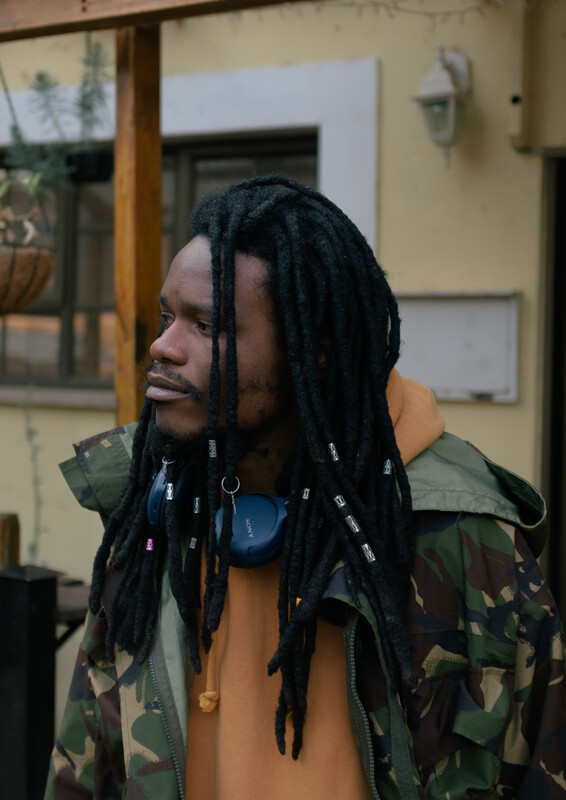

Laudika ‘yaNdangii’ Hamutenya is a Namibian filmmaker, writer and director from Ohangwena, whose work explores the experiences of African youth, identity and the darker complexities of human insecurity. He holds a bachelor’s degree in Writing and Directing from AFDA Cape Town and has written 13 screenplays, directing 12 of them.
His films have been produced across Namibia, South Africa and Germany. In 2021, he wrote and directed the psychological thriller Lauf while completing a six-month exchange at Filmakademie Baden-Württemberg in Germany. The film screened internationally and received three Best Student Film awards.
In 2022, Hamutenya co-wrote and served as Assistant Director on Stray-Flower, a German-produced short filmed in Walvis Bay that premiered at the Max Ophüls Prize Film Festival.
In 2024, he wrote, directed and produced LUNA, a self-funded queer romance, continuing his commitment to telling bold, personal stories rooted in contemporary African experiences.
What was the starting point for this film, and what made you want to tell this particular story?
In 2023, the Namibian Parliament tabled a bill that would allow same-sex marriages legally performed in other countries to be recognised in Namibia. While this felt like a small but significant step forward, it was followed by a wave of public protests against queer rights. Around the same time, I was beginning to explore my own sexuality beyond heteronormativity. The public reaction made me question whether I had the courage to openly pursue a queer relationship in such a hostile environment. My relationships became spaces where I could feel safe, but only privately. That made me wonder: Can love truly survive when you are constantly forced to hide it?
What did the short-film format allow you to do creatively that a longer format might not have?
Initially, making a short film was a practical decision. I had been back in Namibia for three years and wanted to make something at home, so I self-financed the project and brought together a group of young, aspiring filmmakers. The short format allowed us to focus intensely on one emotional experience: a man haunted by the memory of a past love. The film relies heavily on images, repetition and silence rather than dialogue, allowing moments to linger like fragmented memories.
Is there a particular moment, character or idea in the film that holds special significance for you as the director?
The idea that love is political holds particular significance for me. Just as we fight for our political beliefs, we should fight for the right to love without persecution. Without that courage, we end up policing ourselves and hiding the people we love from the world. I also believe that fighting for the right to love isn’t only about taking to the streets. It can be as simple as loving happily and freely in public spaces — showing people that your love exists and is just as beautiful as the love society expects from us.
What conversation do you hope the film creates with audiences after they leave the cinema?
I hope it creates conversations about making more Black, African queer cinema and art. We need more of these stories, particularly as our own leaders increasingly turn against us.
Where does this film sit within your wider creative journey, and what are you interested in exploring next as a filmmaker?
Luna was my first queer film, and it opened up a much deeper interest in exploring queerness through my work. I’m now developing my debut feature, Nuusiku, a magical-realist queer film that expands these questions into culture, identity and belonging. I believe the fight for the freedom to love begins internally. Before we can demand space in the world, we have to find the courage to accept ourselves, especially when society teaches us to reject who we are. That extends beyond queerness. As an African filmmaker, I’m interested in how Westernisation has shaped the way we view our histories and cultures. Nuusiku explores what it means to recover that lost sense of self and learn to love where we come from.