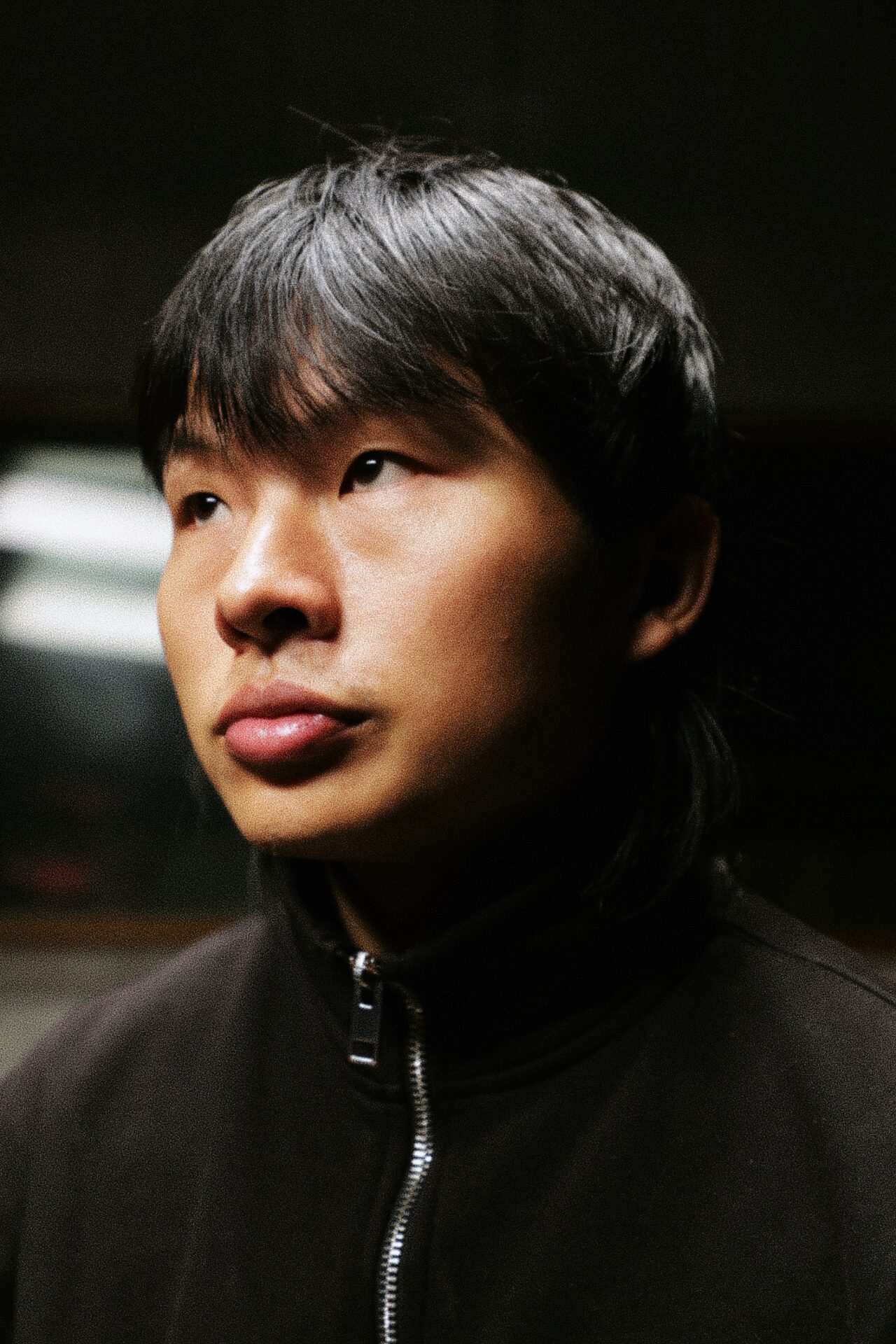

Kwei Shun-Yu is a Chinese photographer and documentary filmmaker whose work explores street life, human behaviour and the overlooked details of everyday experience. Born in Chongqing, China, and shaped by time spent living and travelling internationally, including extensively in Hungary, he brings a cross-cultural perspective to his visual storytelling.
With a background in Sociology, Kwei is currently completing an MA in Documentary Filmmaking at the University of Cape Town. His practice moves between photography and documentary, using observation, instinct and narrative to encourage audiences to question how they see the world around them.
Drawn particularly to street photography, Kwei searches for unexpected moments and what he describes as the beauty of imperfection, challenging conventional ideas of beauty and carefully curated digital identities.
His documentary Talking to Family follows his return to Chongqing after years abroad, exploring family relationships, distance and unspoken expectations.
What was the starting point for this film, and what made you want to tell this particular story?
The starting point was a phone call from my mother on Chinese New Year in 2025. She told me that my grandmother had passed away that morning. I was studying in Cape Town at the time and couldn’t return home. I had always felt that I needed to have more conversations with my family, especially my grandmother, because she was a quietly special person. Her unexpected passing made me realise I could no longer wait, so I returned home during my school break.
What did the short-film format allow you to do creatively that a longer format might not have?
It takes longer to edit something shorter. I feel that short films remove the pressure of having to say more, allowing me to focus intently on telling a small story. I think of a short film as an appetiser, while a feature is the full meal — appetiser, main course, dessert and everything in between.
Is there a particular moment, character or idea in the film that holds special significance for you as the director?The conversation between my mother and me at the beginning of the film is probably my favourite moment. You can hear her hoarse, subdued voice, but the camera never directly shows her face. For me, the emotion carried in her voice is more powerful than simply showing someone who looks dejected.
What conversation do you hope the film creates with audiences after they leave the cinema?
Many people have approached me after watching the film to say how much they related to it, despite coming from different cultural backgrounds, families and languages. I don’t try to predict what audiences will discuss. I’m simply happy if they leave with something to think about.
Where does this film sit within your wider creative journey, and what are you interested in exploring next as a filmmaker?
This is a student film and my first short film. It has helped me understand what I’m capable of, introduced me to many people and sparked numerous conversations. I hope to carry those skills and conversations into my future creative work. As for what I want to explore next, I can’t reveal that just yet. What I do know is that I want to listen patiently to the stories the elderly members of my family have to tell.