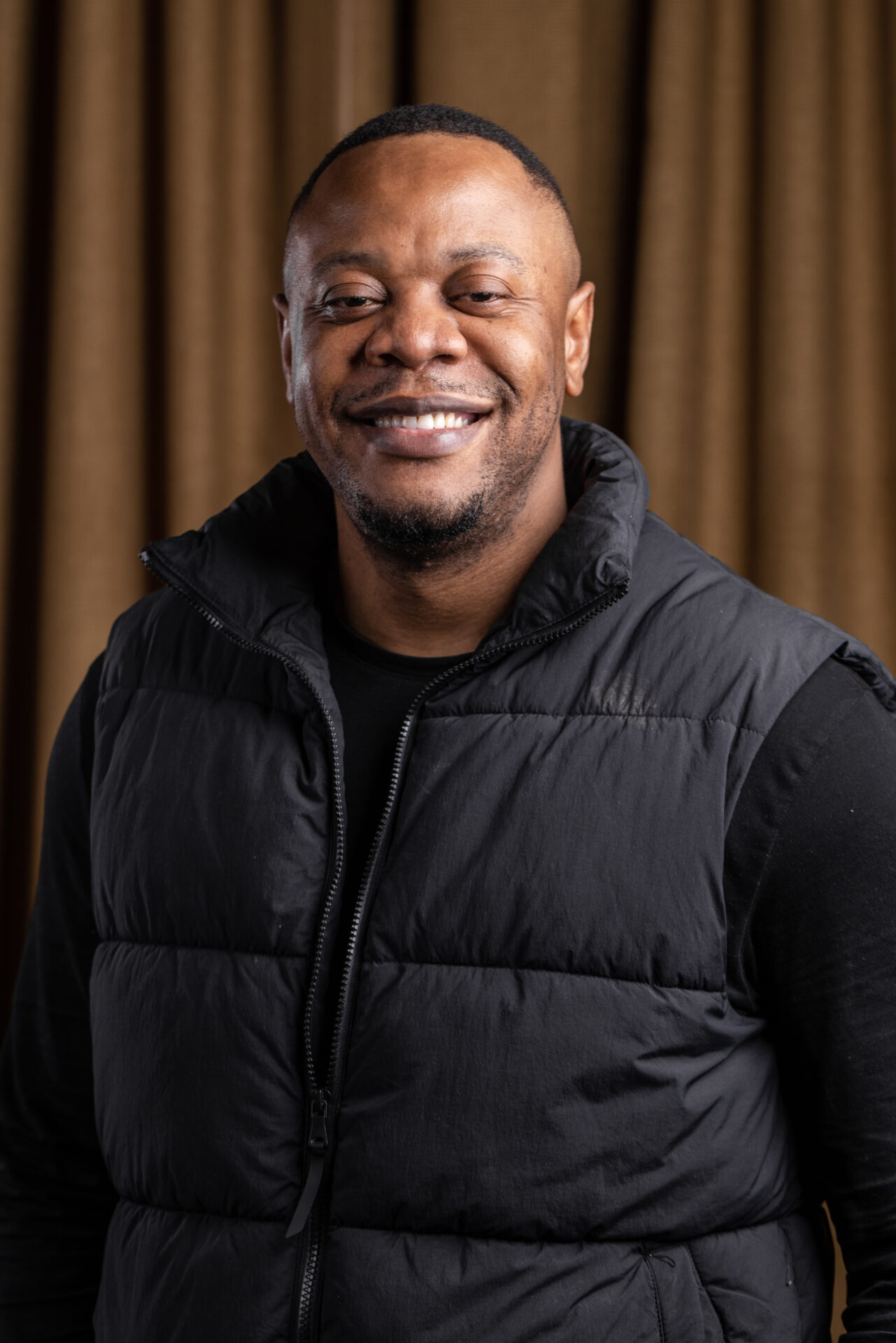
Isaac Kasende is a filmmaker born in the Democratic Republic of Congo and based in Johannesburg, South Africa. He began creating no-budget films in high school and now tackles professional projects that blend genre storytelling with deeper themes. Whether directing or editing, Isaac aims to craft thought-provoking narratives that entertain and linger in the mind long after the credits roll.
1. What inspired the story behind your short film?
The idea came to me during a stay at a hotel while taking time off from a shoot. The hotel was unusually quiet, giving me the chance to connect with the staff—especially a young woman working as the chef. Listening to their stories, particularly about entitled guests, really struck a chord. It echoed something I’ve always observed: the stark divide between the rich and the poor. Growing up in the DRC, that disparity was glaring and deeply personal, and this story is, in part, a response to that.
2. What message or emotion do you hope the audience takes away from your film?
First, I want audiences to be entertained—to laugh and enjoy the chaos. But beyond that, I hope it sparks reflection on ambition and greed. We all have a little green monster inside us that always wants more. I also want viewers to reconsider how they treat people who serve them. These workers are often invisible, yet they witness so much of who we truly are.
3. What’s your go-to creative ritual before a shoot day?
I don’t have a strict ritual—except for a bout of pre-shoot insomnia, haha. Mostly, I obsessively run through the scenes in my head, visualizing every detail.
4. What’s one film you wish you had directed—and why?
So many! Inception, Parasite, and especially Get Out by Jordan Peele. It’s a brilliant blend of horror and social commentary, built on a simple, powerful concept—and it was made on a modest budget. That’s genius filmmaking.
5. If you had to shoot a short film using only three props, what would they be?
A TV, a cellphone, and a plate. Simple items—endless possibilities.
6. What’s your guilty pleasure movie or series you rewatch all the time?
Shrek 1 and 2. No shame!
7. Why are short films important in today’s media landscape?
Short films allow us to tell impactful, focused stories within a tight timeframe. They’re bold, punchy, and perfect for experimenting with new ideas. In today’s fast-paced world, they’re more vital than ever.
8. What advice would you give to someone making their first short?
Respect the medium. Don’t treat it as just a stepping stone to a feature or a proof of concept. See it as a privilege—a rare opportunity to pour everything you have into a story. Approach it as if it’s the last thing you’ll ever make—something that might still be watched 200 years from now, if we’re lucky enough to still be around.
9. What’s one question you wish interviewers asked—and how would you answer it?
“What superpower would you like to have?”
Definitely teleportation. No question.
10. Why are festivals like the FAME Shorts Film Festival so important?
Because they celebrate the art of short filmmaking at the highest level. FAME Shorts provides a powerful platform for emerging voices—especially homegrown talent—and helps introduce the world to the next generation of storytellers.