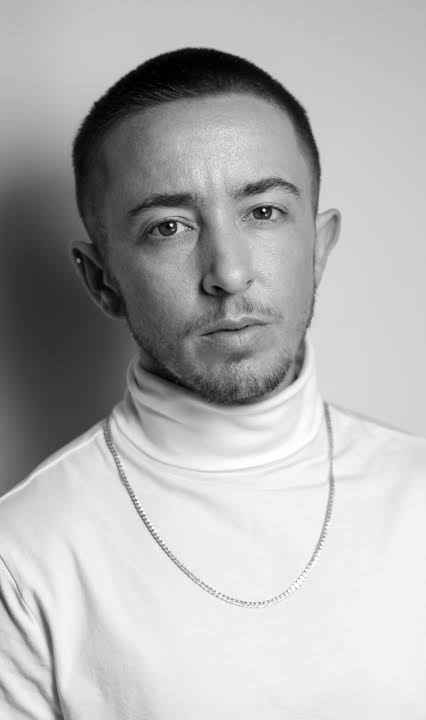

Gabe Gabriel is a queer South African writer and director whose work brings bold, distinctive perspectives to contemporary storytelling.
His previous projects include No Hiding Here, commissioned by Showmax, and the feature film Runs in the Family, which premiered on Netflix, won Best South African Film at the Durban International Film Festival, and received a GLAAD Media Award nomination.
Gabriel also served as lead writer on Netflix’s Mandala Murders, which reached the number-one spot in 17 countries, demonstrating the international reach of his storytelling.
He is currently in post-production on his latest feature film, an international project supported by Eurimages, Screen Ireland and Telefilm Canada.
Across film and television, Gabriel continues to build a body of work that combines a distinctly South African voice with stories that connect with audiences around the world.
What was the starting point for this film, and what made you want to tell this particular story?
It started with a call from the British Film Institute, which was looking for queer-centred projects of 10 pages or fewer to foster co-production between the UK and Africa/SWANA. We — Loren and Gabe, two nonbinary Capetonian filmmakers — started dissecting the stories we’d been thinking about and decided 10 minutes would be a fun amount of time to take a stab at our problematic fave: Cape Town, and bring the fickle nature of its violent binaries to light. Dread is about someone trying to survive in a city where their peace and spirituality are directly threatened by modern-day colonisation in the forms of gentrification, oversaturated tourism and cultural appropriation.
What did the short-film format allow you to do creatively that a longer format might not have?
We got to queer a genre without having to bend to what the market, channels, streamers or festivals usually prescribe. We could simply play, learn and push ourselves and our vision for the film alongside a very queer cast and crew.
Is there a particular moment, character or idea in the film that holds special significance for you as the directors?
We always wanted the line, “Our love is holy water,” to be in the film because we see queer love as an antidote to the demons, traumas and hardships of the world. For many queer people, particularly queer people of colour, the safest they can feel in oppressive cities like Cape Town is often in the private company of lovers and chosen family. In Dread, as in all our work, we set out to portray queer love as a gift of support and refuge from a cruel world — a holy water in the face of evil.
What conversation do you hope the film creates with audiences after they leave the cinema?
We hope it opens conversations around oversaturated tourism and the impact it has on locals — and hopefully makes people think before trauma-dumping on their Uber driver again.
Where does this film sit within your wider creative journey, and what are you interested in exploring next as filmmakers?
Independently, we have both gone on to direct long-form projects — a film and a TV series respectively — that are very close to our hearts. Both build on Dread’s theme of love and/or community as holy water in a rotten world. We’re also constantly workshopping new ideas and have a collection of shorts we want to co-direct together, as well as within our queer filmmaker collective. We want to make as many queer, sapphic, spooky, quirky, interesting and different films as possible, and Dread has played a huge part in paving the way for us.