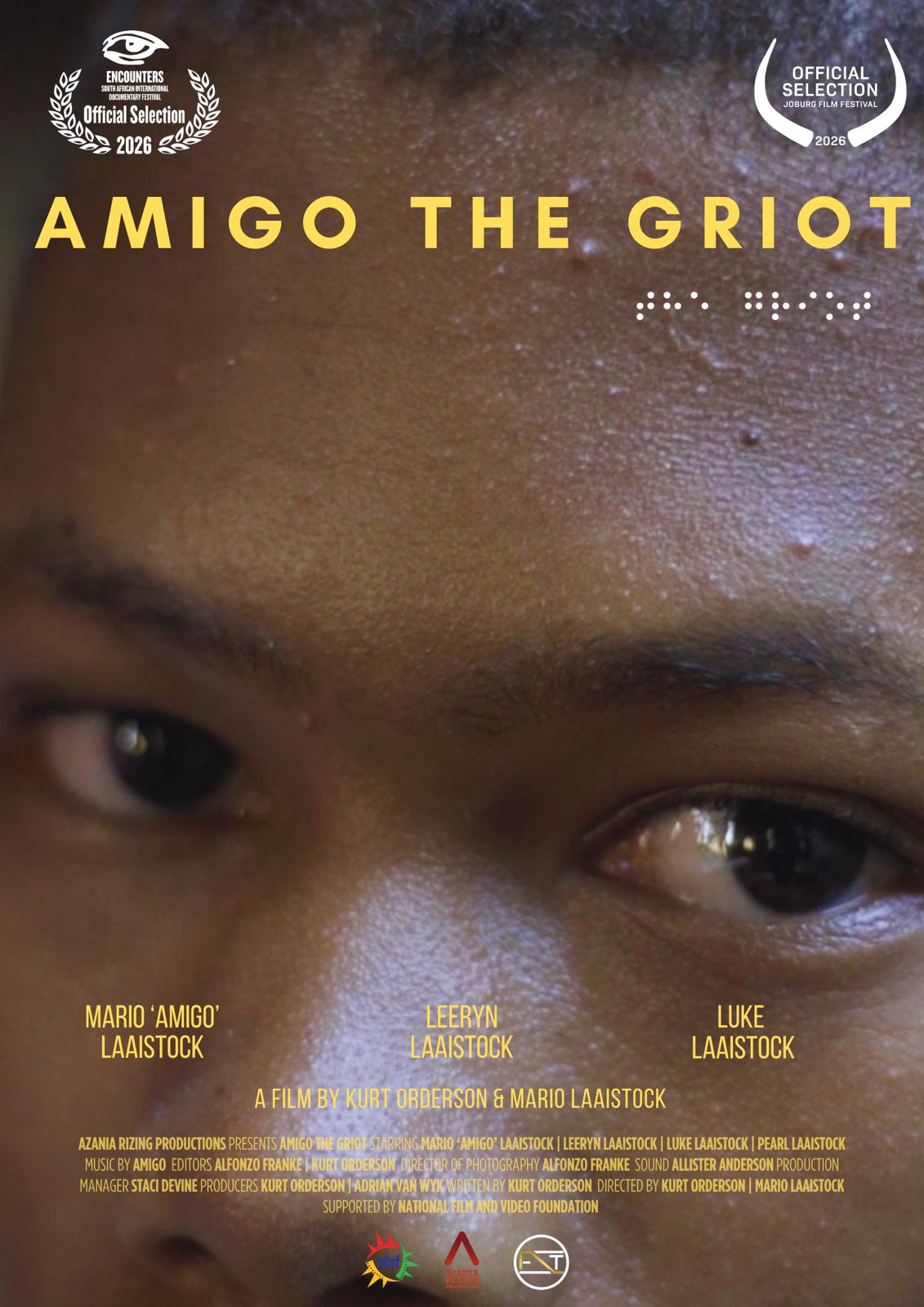
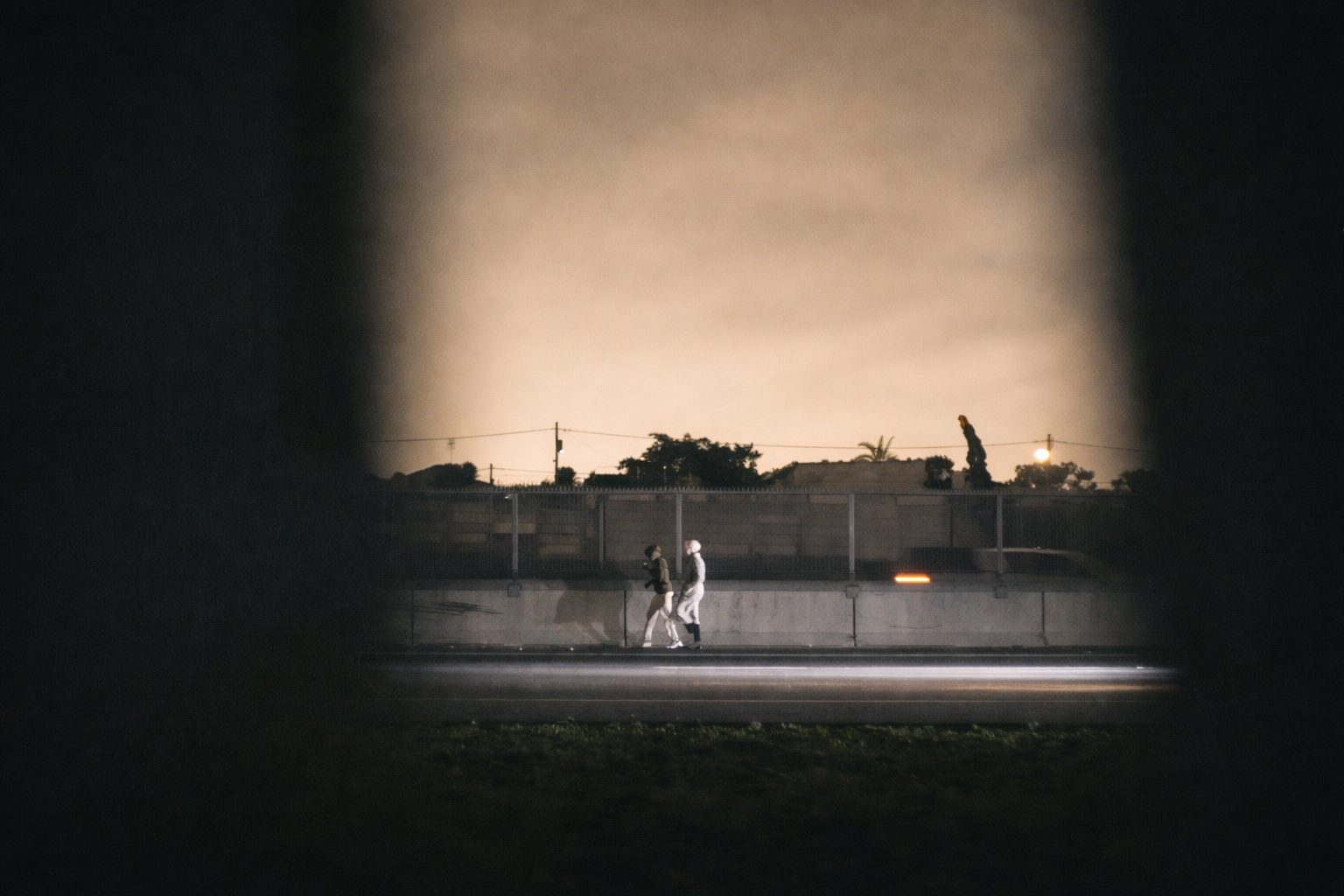
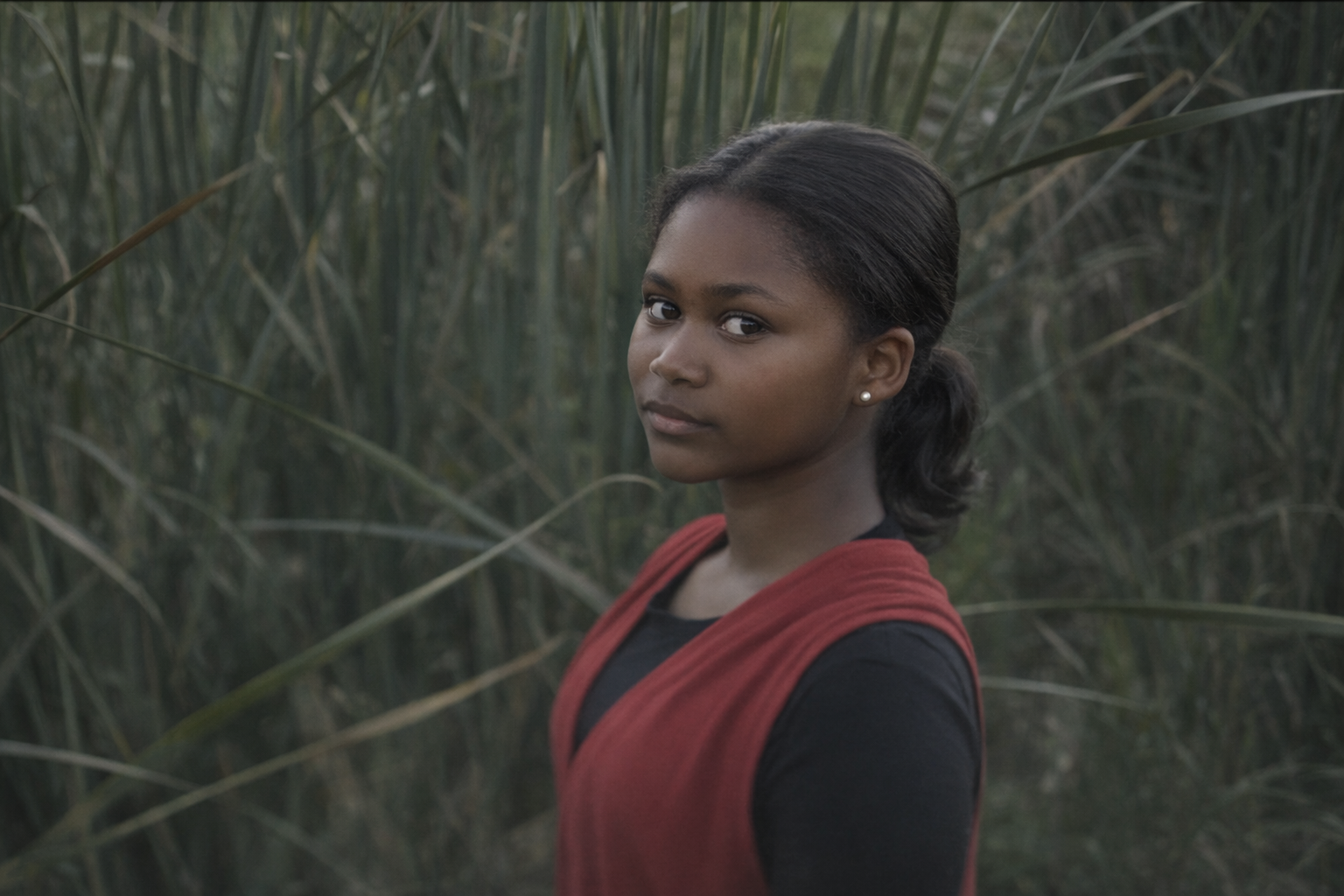
FAME Shorts Film Festival sits down with filmmaker Kurt Orderson to learn more about the inspiration behind Amigo the Griot, his creative collaboration with Mario, and the film’s exploration of blindness, masculinity, memory, identity and what it really means to see and be seen.
What was the starting point for this film, and what made you want to tell this particular story?
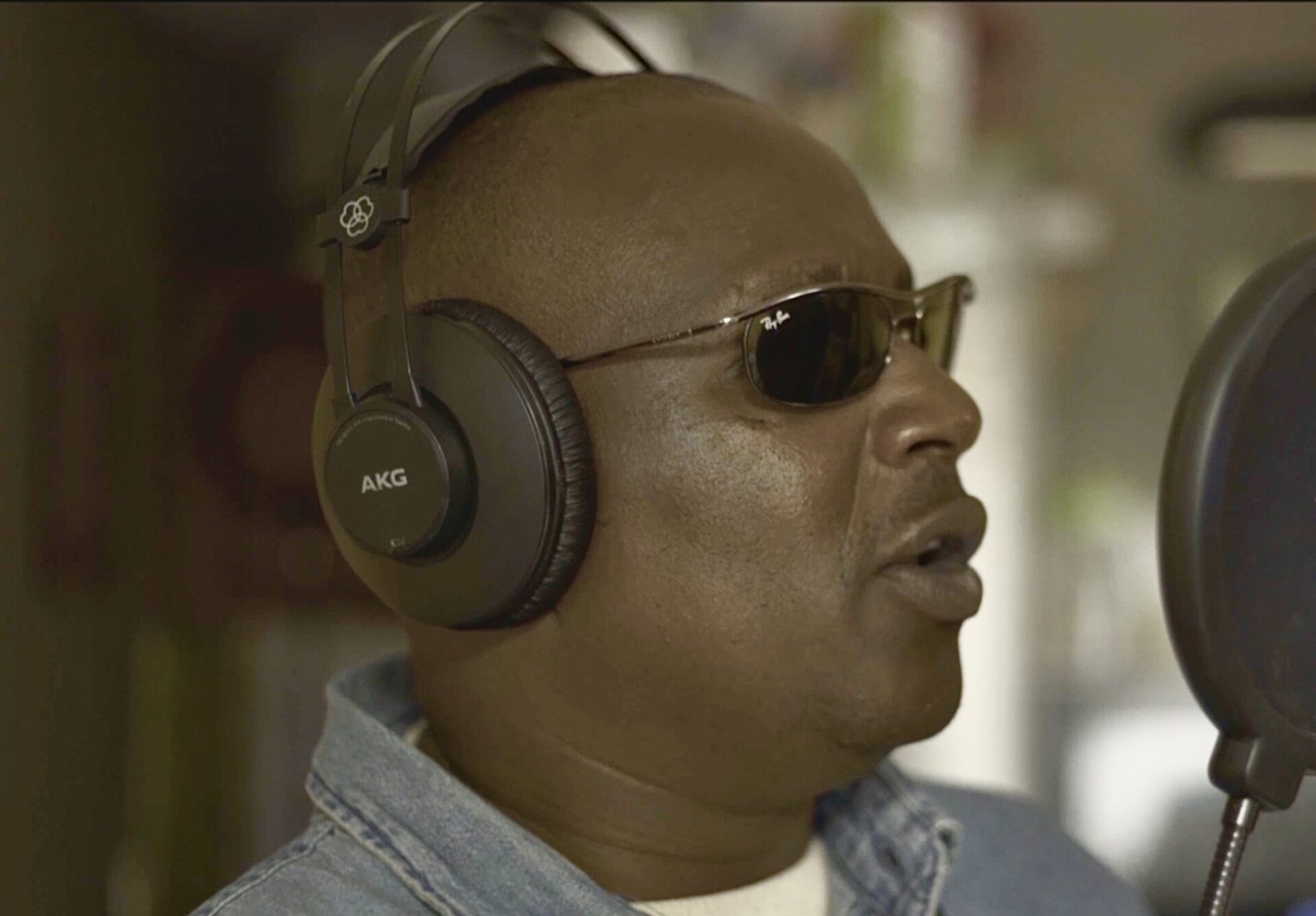
I’ve known of Mario for years through Cape Town’s Hip Hop community, but we really got to know each other about 12 years ago when I was making a short film about independent backyard producers and their creative processes. Mario featured in that film, which I made in 2014. What stayed with me was that, while filming him, I had no idea that Mario was blind. Years later, I became interested in revisiting that earlier film, not simply as a continuation, but as an opportunity to continue the conversation with Mario and explore the story collaboratively, with him as a co-director. In a culture increasingly dominated by images, I became fascinated by exploring image-making through the perspective of a blind Hip Hop storyteller whose lyrics are visceral and deeply visual. The film became an exploration of how we see, remember and construct fragmented images, and what happens when those processes are approached outside conventional ways of “seeing.” As an ongoing theme in my work, I was also interested in how my peers think about masculinity on the Cape Flats, and what replaces ceremonies, rituals and initiation processes for young men when there are no longer strong cultural or communal anchors to lean into. What happens when young men construct their own ideas of manhood in environments shaped by colonial violence, slavery and intergenerational displacement? Rather than following a traditional documentary structure, we built a collage of vignettes, memories, conversations and performances that allow Mario to revisit an episode that fundamentally altered his life trajectory. At the same time, the film creates space for him to reconnect with his friends as they undertake their own collective journey of healing.
What did the short-film format allow you to do creatively that a longer format might not have?
The short-film format allowed us to be more intuitive and challenge ourselves as orators of memory and nostalgia. Rather than having to explain everything or build towards a conventional narrative resolution, we could work with fragments, Mario’s subconscious archives, gestures, conversations and the auditory soundscape of his surroundings, allowing them to exist in tension with one another. This felt particularly important because the film is concerned with perception and the limitations of conventional ways of seeing. It allowed us to move between the intimate and the political, between Mario’s personal history and broader questions around masculinity, Creole identity formations and the spectrum of blindness, both physical and metaphorical. It also gave us the freedom to make something visually poetic and impressionistic — and simply to make something different. The film doesn’t attempt to provide definitive answers. Instead, it creates space for fragments to accumulate and for the audience to make their own connections.
Is there a particular moment, character or idea in the film that holds special significance for you as the director? Two moments hold particular significance for me. The first is a scene featuring Mario and his friend gathered around a fire in the front yard of his friend’s home in Wesbank. It is one of the most profound moments I’ve ever witnessed in cinema and, cinematically, captures the heart of the film. The other is Mario and his partner, Pearl, sitting on their bed, sharing a moment of banter and reminiscing about how they first met, the reality of “standing” in love, and the concept of inner beauty moving beyond cliché to become literally your only point of reference and departure.
What conversation do you hope the film creates with audiences after they leave the cinema?
I hope the film sparks conversations about how we see and understand one another, particularly around blindness, masculinity, intimacy, care and identity politics. I also hope it challenges audiences to think beyond the physicality of blindness and consider the different ways we all see and navigate the world, perceive unconscious biases and othering, and construct our own identities. Rather than providing definitive answers, I hope the film leaves audiences questioning their own ideas of what it means to truly see, to be seen and to understand another person.
Where does this film sit within your wider creative journey, and what are you interested in exploring next as a filmmaker?
I hope the film expands our normative spectrum of world-making beyond sight, particularly around blindness, masculinity, intimacy, care and identity formation. I’m interested in continuing to explore the different ways we navigate the world, perceive unconscious biases and othering, and make sense of ourselves and one another. I want to question what it means to truly see, to be seen and to overstand the multidimensional ways we experience the physical world while co-existing in the invisible.