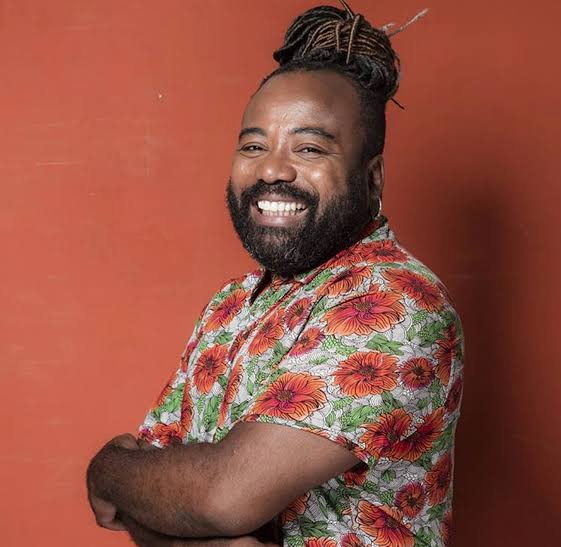

Rodrigo França is a Brazilian film and theatre director, writer, actor, philosopher and civil rights activist whose work places Black identity, representation and social justice at the heart of contemporary storytelling.
Across film, theatre and literature, França has built a multidisciplinary career dedicated to expanding the visibility of Black Brazilian stories and voices. He directed the Netflix comedy A Cut Above (Barba, Cabelo & Bigode), becoming the first Black director of a Brazilian Netflix original film.
He is also the creator of The Little Black Prince (O Pequeno Príncipe Preto), a celebrated children’s book and stage production that explores identity, ancestry, representation and belonging and has reached audiences across Brazil.
Beyond his creative work, França is a prominent cultural commentator and advocate for racial equality and human rights. Through his filmmaking, writing, performance and activism, he continues to challenge established narratives while creating work that celebrates Black culture, identity and experience.
What was the starting point for this film, and what made you want to tell this particular story?
The starting point came from Lucas Oranmian, who brought me this story. It grew from a personal reflection on fatherhood, but also from his concern about the absence of Black male characters shaped by affection, care and tenderness, without violence determining their destiny. When I read the script, I immediately understood how precious that perspective was. For a long time, Black men have been framed in Brazilian audiovisual narratives through a narrow idea of masculinity: the absent father, the violent man, the man unable to express affection. These realities exist, but turning them into the only possible narrative also produces violence. Then there is Dandara Arcebispo as Thelminha, or rather, Zuri — a Black girl who sees herself as the Queen of Angola. She doesn’t need someone to teach her to be proud of herself; she already knows who she is. Ravi believes he is adopting a child, but discovers that his own imagination will also be transformed by her.
What did the short-film format allow you to do creatively that a longer format might not have?
The short film demands a kind of precision that interests me deeply. You don’t have time to overexplain a relationship. You have to trust gestures, looks, silences and what happens between two people when apparently nothing is happening I didn’t want to create a thesis about Black fatherhood, adoption or ancestry. I wanted to observe an encounter. Ravi and Zuri are learning each other, and the short allows us to enter that relationship through a half-open door and leave before everything is resolved. The audience isn’t given a ready-made answer about what it means to be a father, a daughter or a family. They simply witness the beginning of an intimacy.
Is there a particular moment, character or idea in the film that holds special significance for you as the director? The idea that moves me most deeply is that of a Black child claiming the right to be a queen. It may look like a childhood game, but there is something profound within it. Black children grow up receiving messages about who they are allowed to be and how they should see themselves. Zuri moves in the opposite direction. She creates her own image and tells the world who she is. Dandara understood this beautifully. Zuri remains a child — imaginative, funny, confident and full of layers. Lucas, as Ravi, doesn’t compete with that strength. He creates a man willing to learn how to become a father. For me, their relationship is the heart of the film: a Black man and a Black girl looking at each other without violence occupying the centre of the frame.
What conversation do you hope the film creates with audiences after they leave the cinema? I’d like audiences to think about the images we offer Black children and Black men. We talk a great deal about representation, but what interests me is the repertoire of humanity we are creating. It isn’t enough to place a Black person at the centre of the screen if we continue to give them the same destinies, conflicts and limitations. I want someone to look at Ravi and recognise the possibility of a Black man who is caring, vulnerable and loving. I want a child to look at Zuri and understand that their imagination doesn’t have to obey the place the world has assigned to them. The film also speaks about ancestry, not as something imprisoned in the past, but as something that can help us imagine who we can be in the present. When memory is alive, it also creates the future.
Where does this film sit within your wider creative journey, and what are you interested in exploring next as a filmmaker?
This film connects deeply with questions that have been present throughout my work: identity, belonging, race, memory, Black masculinities and the possibility of creating different imaginaries. But The Father of the Queen of Angola also shifts something in my creative journey. There is a tenderness I want to explore more deeply. Black artists have long had to denounce the violence inflicted upon us, and that remains essential, but I don’t want violence to have a monopoly over our complexity. I want to film Black people loving, raising children, growing older, making mistakes, desiring, being contradictory, funny, fragile, ordinary and extraordinary. I want us to have the right to complexity. Ultimately, that is the cinema I want to continue making: stories in which Black characters don’t have to justify their presence. They simply exist, with all the human complexity that cinema has distributed so unequally for so long.